
Telecommunications · Field Services
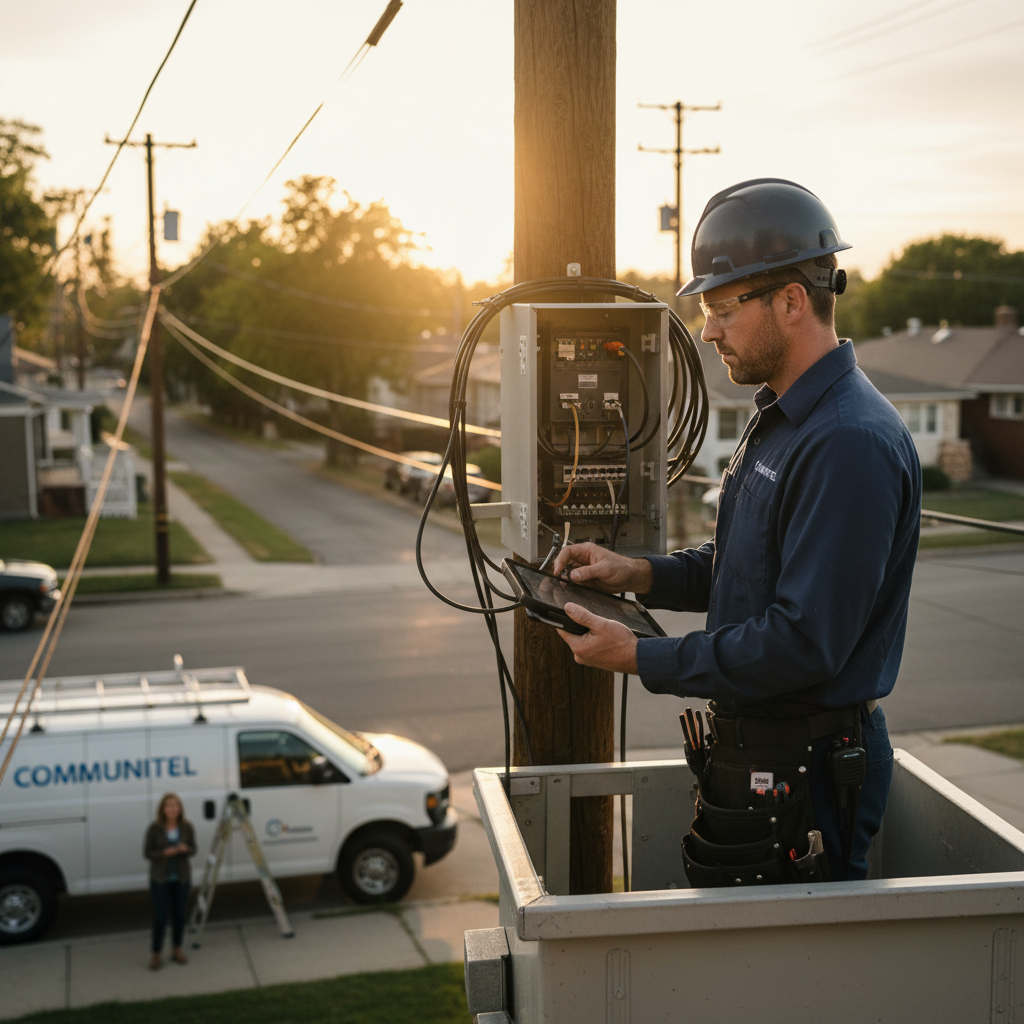
A telecommunications company and service partner to one of Canada’s largest cable and media providers faced a costly and persistent challenge.
They invested heavily in recruiting and training front-line Technicians, yet retention remained low and performance varied significantly across the workforce. Some Technicians consistently outperformed their peers in both productivity and add-on sales. Others struggled to generate similar results despite receiving the same training and entering the role with similar technical qualifications.
The company wanted to understand why.
Each new Technician completed a minimum of eight weeks of paid technical training before entering the field. The company invested more than $500,000 annually in training alone, yet fewer than one in three hires remained beyond six months. Direct training losses exceeded $300,000 each year before accounting for lost productivity, operational disruption, or customer experience impact.
Operational risk exposure
Estimated annual direct training loss tied to turnover
New hires remaining beyond six months
The challenge extended well beyond technical ability.
The role required people who could work safely and independently in unpredictable environments, build trust quickly with customers, and recognize opportunities to improve the customer experience through thoughtful recommendations and add-on services.
The strongest Technicians were not simply more technically capable. They approached the work differently.
To better understand those differences, Fit First conducted a Performance DNA study across 165 Technicians. Sales and productivity data were analyzed over a six-month period and cross-referenced over twelve months to identify consistent performance patterns and eliminate anomalies.
The objective was straightforward: identify the traits most predictive of both performance and retention, then use those insights to improve hiring, development, and workforce alignment.
The first step was to measure the performance gap across the organization. Using Utility Analysis, Technicians were separated into Top, Middle, and Bottom performance tiers based on objective sales results.
The findings exposed a significant opportunity already sitting inside the existing workforce.
What became clear very quickly was that even modest movement across performance tiers would create measurable business impact. Improving the performance level of a relatively small portion of the workforce — moving 10 Bottom Tier Technicians into the Middle Tier and 5 Middle Tier Technicians into the Top Tier — represented nearly half a million dollars in additional annual revenue.
Projected annual revenue increase from moving 10 Bottom Tier Technicians to Middle Tier and 5 Middle Tier Technicians to Top Tier
The next step was to understand what differentiated high performers from everyone else.
All 165 Technicians completed the Profiles Sales Assessment, measuring how individuals think, process information, behave, and what motivates them in their work environments. As performance data and assessment data were overlaid, the pattern became clear.
Many traits appeared consistently across all Technicians — likely the traits that helped people get hired in the first place. But only a small number of characteristics clearly separated top performers from the rest.
Traits consistently demonstrated by top performers:
These individuals were more likely to take ownership, adapt quickly in the field, and identify opportunities independently while still respecting operational structure.
The study also uncovered important differences between Residential and Commercial Technicians. Top-performing Commercial Technicians tended to be more skeptical, less manageable, and less willing to accept direction at face value than their Residential counterparts. Residential Technicians, meanwhile, were more strongly motivated by the technical aspects of the work itself.
These distinctions mattered because they changed how people needed to be selected, managed, coached, and deployed.
The organization used these insights to strengthen hiring decisions, improve role alignment, and rethink career pathing across the business. Managers gained clearer guidance on how to communicate with and coach different types of Technicians. Hiring became more focused on the traits linked to long-term success rather than relying primarily on experience or technical credentials.
The impact extended beyond hiring.
As workforce performance improved, the company’s media partner realigned service territories based on contractor performance metrics — and this client was awarded the most desirable territory in the market.
Business Impact
What this organization uncovered was not simply a sales issue or a training issue. Different levels of performance were being driven by differences in how people approached the work itself.
Once those patterns became visible, the company could make more informed decisions about hiring, development, coaching, and deployment.
The result was not just stronger productivity, but a more aligned and more resilient workforce overall.